
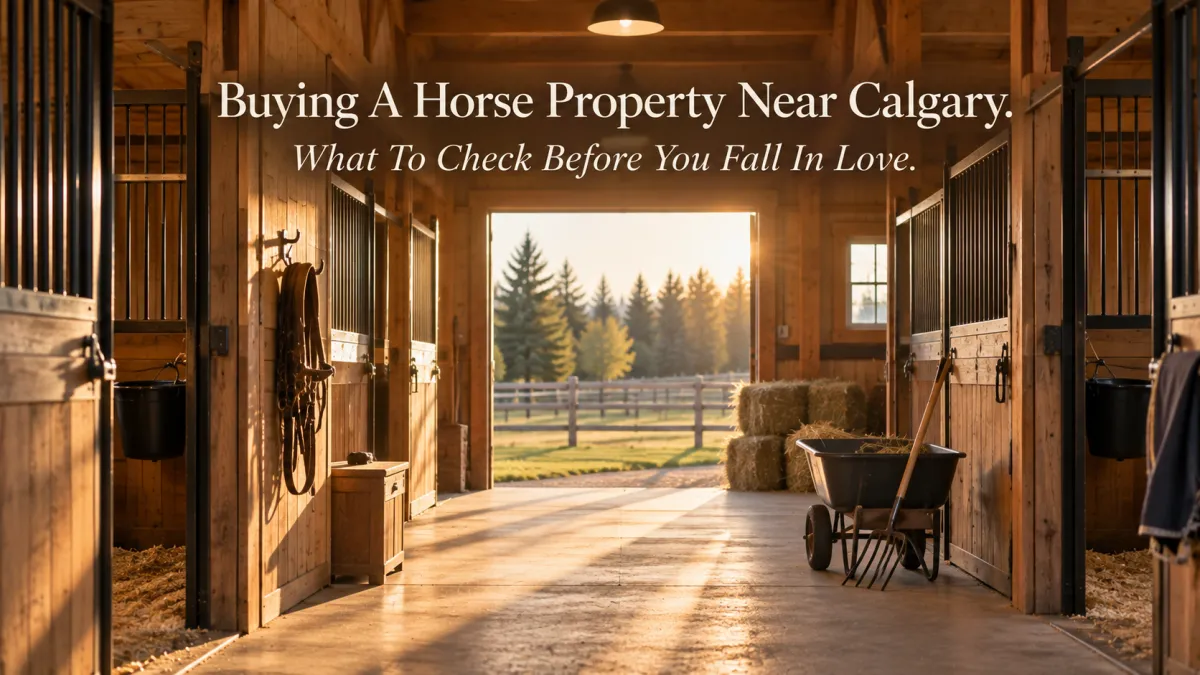
Buying a Horse Property Near Calgary: What to Check Before You Fall in Love
A horse property is a genuine dream for a lot of Calgary-area acreage buyers. For many of the buyers I work with, the horses are actually the reason for the whole move. The property comes second. The animals come first. That emotional weight is real, and it is one of the reasons a horse property purchase is also one of the most consequential kinds of acreage decision a buyer can make.
It is also one of the property types where a beautiful surface presentation can most easily hide what actually determines whether the property will work for horses over the long term. An Instagram-perfect setup can still miss on any of the six categories that matter most. And the time to find that out is before the offer goes firm, not after possession.
This post walks through the six categories of practical due diligence worth working through on any specific Calgary-area equestrian parcel a buyer is seriously considering. It is general and educational. The specifics for any given property need to be verified for that property with the right professionals. What follows is the mental model.
1. Water capacity for animals, not just for a household
Household water requirements and animal water requirements are different. A well or cistern that reliably supports a family of four may or may not reliably support that same family plus the intended number of horses on top of it. Water demand for animals is real, and it is on top of everything else the property is already using water for.
What this means for due diligence: a general "the well works" answer from the property listing is not enough. The specific water source needs to be assessed with the specific intended animal load in mind. A property that works well as a residential acreage can be marginal as a horse property once animal water demand is added. Verify it, do not assume it.
2. Zoning and permitted animal use for this specific parcel
The specific number of animals a Calgary-area parcel is permitted to keep varies by county, by land-use classification, and by parcel size. It is not a fixed rule that applies universally, and it is not something a buyer can safely assume from what the neighbours are doing.
What this means for due diligence: the current land-use bylaw for the specific county the property sits in needs to be checked, and the specific parcel needs to be verified against it. The county's own planning department is the authoritative source. Two properties down the road from each other can have different permitted animal use if their zoning classifications or parcel sizes differ.
This is one of the checks buyers most often skip, usually because they assume the property is fine because someone else nearby is keeping animals. That is not a reliable read. Verify for the specific parcel.
3. Real condition of barn, stalls, fencing, and shelter
Photographs can flatter horse infrastructure in ways that are hard to see through until you are physically on the property. A barn that photographs beautifully can have foundation issues, ventilation problems, structural concerns, or wiring that would need to be rebuilt. Fencing that looks tidy in wide shots can be undersized for horse-safe use, or aging past its functional life. Stalls that look adequate on video can be undersized, poorly ventilated, or have footing that has never been properly maintained.
What this means for due diligence: physical walk-through of every structure a horse will actually use, ideally with someone who has real experience in equestrian infrastructure. The specific things to look at include structural integrity, ventilation, footing in stalls, water access at each stall, fencing type and condition, gate quality, run-in shelter placement and condition, and the general state of maintenance across the whole setup. What you are looking for is not perfection. It is honesty. Where has the previous owner cut corners, and where have they maintained things properly?
4. Drainage and footing
Wet, poorly drained land is a real problem for horses, and it is one of the harder issues to see if a buyer is viewing the property in a dry month. Chronically wet paddocks lead to hoof problems, footing degradation, and areas that become genuinely unusable during shoulder seasons and spring runoff.
What this means for due diligence: check the specific drainage profile of the property, especially in the areas where horses will actually be turned out. Look at the low spots. Ask the current owner directly about spring runoff and mud season on the property. Look for signs of past water accumulation. If the property is being viewed in August, imagine what April will look like on that specific parcel, and try to get honest answers from someone who has been there for one.
5. Pasture quality and acreage-per-horse for this specific setup
How many acres a horse actually needs varies by pasture quality, soil type, climate, and how the property is being managed. A well-maintained mixed pasture on good soil in a moderate climate supports different animal density than an over-grazed thin pasture on poor soil. Buyers who assume a fixed acreage-per-horse rule can end up either over-buying land they do not need or under-buying land that will not sustain the intended animal load without significant supplemental feed.
What this means for due diligence: assess the specific pasture on the specific property. Look at what is actually growing. Consider soil condition, past grazing history, and how the property has been managed. Get real advice from someone who knows equestrian land management for the specific area, not a generic rule of thumb from the internet.
6. Access for trailers, feed delivery, and vets
A horse property that is beautifully sited but hard to actually reach with a horse trailer, a feed truck, or a vet's vehicle is a property that will make horse ownership harder in a specific and permanent way.
What this means for due diligence: check the practical access route to the property in all seasons. Can a horse trailer physically manoeuvre in and out? Is the driveway grade, width, and turnaround adequate? Is the access road plowed reliably in winter, and is the responsibility for that plowing clearly established? Can a vet reach the property quickly in an emergency? Feed suppliers reliable in delivering to the address? Access is not glamorous, but on a horse property it is one of the things that most affects day-to-day livability.
Why "beautiful is easy to see, suitability has to be checked"
The through-line across all six of these categories is the same. A horse property that looks right in photographs and feels right at the walk-through can still miss on any of the six things that actually determine whether the property will work for horses. The visual case for a property is easy to make. The functional case has to be built through actual due diligence.
My job on a horse property purchase is to bring both the general acreage due-diligence lens (through the Acreage Protection Protocol) and the specific equestrian lens to the process, so my clients are not deciding based on how the property looks. They are deciding based on how the property will actually work for the specific horses they are planning to keep on it. Beautiful is easy to see. Suitability has to be checked.
The bottom line
A horse property purchase is one of the highest-emotion acreage transactions a buyer can make, and one of the ones where the beautiful-disaster risk is real. The six checks (water for animals, zoning and permitted use, barn and infrastructure condition, drainage and footing, pasture and acreage per horse, and access) are the ones worth working through on any specific property before the offer is written.
If horses are part of the reason you are shopping for an acreage in the next 12-18 months, comment HORSE on the video and I will send you my Equestrian & Horse Property Checklist. It is the framework I use with equestrian buyers to make sure the property they fall for is also a property that will actually work for their horses.