
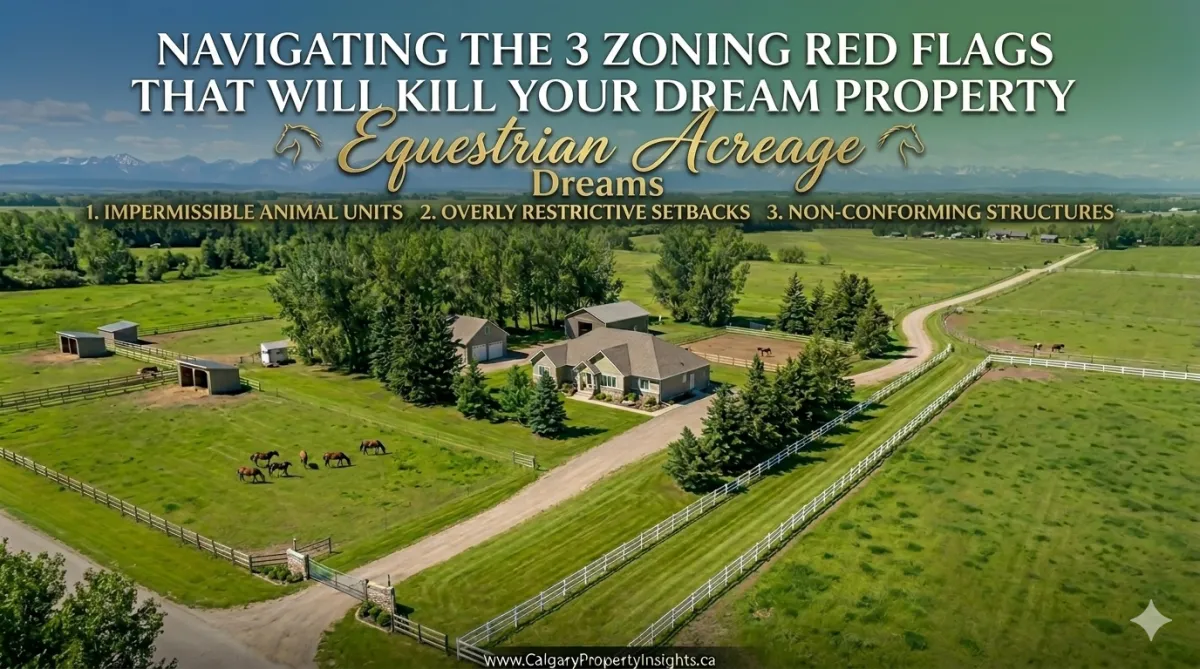
3 Zoning Red Flags That Will Kill Your Horse Property Dreams
Introduction
You've been searching for the perfect horse property for months. Maybe years. You finally find it: a beautiful acreage with existing barn, fencing already in place, paddocks set up, and enough land for your horses. You can picture yourself there. You can see your horses grazing. You make an offer. You close. Then — sometimes weeks later, sometimes months later — you discover a devastating truth: You can't legally keep horses on the property. Or the barn you were counting on isn't permitted and can't be rebuilt if it's damaged. Or the existing facilities violate setback requirements and you can't expand your horse operation. This nightmare scenario happens more often than most buyers realize. And in almost every case, it could have been prevented with proper zoning verification before purchase. I've watched horse property buyers make these mistakes. I've seen the heartbreak when they discover — too late — that their dream property won't work for their horses. And I've seen the financial devastation when they're forced to sell at a loss or spend tens of thousands correcting zoning violations. This post breaks down the three most common zoning red flags that kill horse property dreams, how to identify them before you buy, and how to protect yourself from purchasing a property that won't work for your horses.
Why Zoning Matters for Horse Properties
Before we dive into the specific red flags, let's establish why zoning is so critical for horse property buyers.
What Zoning Actually Controls
Zoning bylaws regulate: Permitted Uses: What activities are allowed on the property (residential, agricultural, commercial, livestock, etc.) Livestock Regulations: Whether you can keep horses, how many, and under what conditions Building Placement: Where structures can be located relative to property lines, wells, and neighboring properties Manure Management: How manure must be stored and where storage facilities can be located Water Source Protection: Separation distances between livestock areas and wells or water sources Structure Requirements: Building permits, inspections, and compliance for barns, shelters, and agricultural buildings
Why Buyers Miss Zoning Issues
Assumption Based on Current Use: 'The previous owner had horses here, so I can too.' Not necessarily. Previous owners may have been grandfathered under old zoning rules, or they may have been operating illegally without enforcement. Assumption Based on Physical Features: 'There's a barn and fencing, so horses must be allowed.' Wrong. The presence of agricultural infrastructure doesn't mean the property is zoned for agricultural use. Previous owners may have built without permits or may have been non-compliant. Reliance on Listing Descriptions: 'The listing says horse property so it must be zoned for horses.' Marketing language doesn't determine zoning. Listings can say 'perfect for horses' even when zoning prohibits livestock. Lack of Verification: Most buyers simply don't verify zoning before purchasing. They assume their realtor or lawyer will catch issues — but unless you specifically request zoning verification, it often doesn't happen.
Red Flag 1: The Property Is Zoned Residential, Not Agricultural
This is the most common — and most devastating — zoning red flag.
The Problem
Many acreage properties near Calgary are zoned as 'country residential,' 'rural residential,' or similar residential designations — not agricultural. What Residential Zoning Typically Allows:
- Single-family dwelling
- Accessory buildings (garage, shed)
- Hobby gardens
- Small-scale poultry (often limited to 6-12 chickens)
What Residential Zoning Often Prohibits or Severely Restricts:
- Horses (considered livestock)
- Cattle, sheep, goats (livestock)
- Commercial agricultural activities
- Large-scale animal keeping
The Variation: Some residential zoning designations allow one or two horses with special conditions (minimum lot size, setback requirements, manure management plans). Other residential zoning designations prohibit horses entirely. And the specific rules vary by municipality — Rocky View County has different regulations than Foothills County, which are different from municipal districts further from Calgary.
Real Example
Property: 8 acres in Rocky View County, existing barn and paddocks, listed as 'perfect horse property' Zoning: Country Residential (CR-1) Buyer Assumption: Eight acres with a barn = horses allowed Reality: CR-1 zoning in that specific area allowed hobby gardens and chickens but prohibited horses and other livestock without a discretionary use permit — which required neighbor consultation and could be denied. Outcome: Buyer discovered this after purchasing. Applied for discretionary permit. Neighbor objected. Permit denied. Buyer couldn't keep horses and had to sell at a loss.
How to Verify
Step 1: Request Zoning Information from Seller Ask the seller's realtor to provide:
- Official zoning designation
- Copy of municipal zoning bylaw section covering that designation
- Written confirmation from the municipality about livestock permissions
Step 2: Contact the Municipality Directly Call or email the planning department for the municipality where the property is located (Rocky View County, Foothills County, etc.) and ask:
- What is the zoning designation for this property? (provide legal land description or address)
- Does this zoning allow horses?
- How many horses are permitted?
- Are there any conditions or restrictions (lot size minimums, setback requirements, permits needed)?
Get the answer in writing via email. Step 3: Make Your Offer Conditional Include a condition in your offer that states the purchase is 'subject to buyer confirming, to buyer's satisfaction, that the property is zoned to permit the keeping of horses.' This gives you an out if you discover zoning prohibits your intended use.
Red Flag 2: The Barn or Stable Wasn't Permitted
Even if the property is zoned for horses, existing barns and stables may not be legal if they weren't properly permitted.
The Problem
Many acreage owners build barns, run-in shelters, and stables without obtaining building permits. This creates 'non-conforming structures.' Why Owners Build Without Permits:
- They didn't know permits were required
- They wanted to avoid permit fees and inspections
- The structure wouldn't have met code requirements
- They built incrementally over time without realizing permits were needed
Why This Matters to You as a Buyer: Rebuilding Restrictions: If a non-permitted barn burns down or is significantly damaged, you cannot rebuild it in the same location or configuration without bringing it into full compliance with current building codes and zoning bylaws. That might mean:
- Moving the barn to meet current setback requirements
- Reducing the size to meet current regulations
- Adding expensive features (sprinklers, electrical upgrades) to meet code
- Or being unable to rebuild at all
Expansion Limitations: If you want to expand the barn, add stalls, or build additional structures, you can't get permits because the original barn was never approved. Municipal Enforcement: Some municipalities require non-conforming structures to be removed or brought into compliance when properties are sold. You could be forced to demolish or relocate the barn as a condition of purchase. Insurance Issues: Insurance companies may refuse coverage or charge higher premiums for unpermitted structures. If the barn burns down and it wasn't permitted, your claim could be denied or reduced.
Real Example
Property: 10 acres with large barn (12 stalls, tack room, hay storage) Buyer Plan: Purchase property, add 4 more stalls to accommodate boarding operation Discovery: Barn was built in 2008 without permits. Municipality had no record of building permit, final inspection, or occupancy approval. Outcome: Buyer couldn't get permits to expand because the original structure was never approved. To expand, they would have needed to bring the entire existing barn into compliance (estimated cost: $40,000+) or demolish and rebuild with permits (estimated cost: $120,000+). They walked away from the purchase.
How to Verify
Step 1: Request Building Permit Records Ask the seller's realtor to provide copies of building permits for:
- The barn or stable
- Any run-in shelters
- Riding arenas or covered structures
- Hay storage buildings
- Any agricultural outbuildings
Step 2: Verify with the Municipality Contact the municipality's building department and ask: 'Can you confirm that building permits were issued and final inspections completed for [address or legal land description] for the following structures: barn built approximately [year], run-in shelter, etc.?' They can search their records and confirm whether permits exist. Step 3: Physical Inspection Sometimes permit records are lost or incomplete. If the municipality can't find records but the structure appears professional and code-compliant, you may be able to get it inspected and retroactively approved — but this is expensive and not guaranteed. Step 4: Make Your Offer Conditional Include a condition: 'Subject to buyer confirming that all agricultural structures on the property have valid building permits and final inspections on file with [Municipality].' If permits don't exist, you can either:
- Negotiate a price reduction to cover the cost of bringing structures into compliance
- Walk away from the deal
Red Flag 3: Setback and Separation Distances Don't Comply
Even if zoning allows horses and the barn was permitted, existing facilities may violate setback and separation distance requirements — preventing you from expanding or requiring expensive relocation.
The Problem
Municipal bylaws require specific distances between:
- Barns/stables and property lines
- Barns/stables and neighboring residences
- Manure storage and property boundaries
- Manure storage and wells/water sources
- Livestock paddocks and wells
Typical Setback Requirements (Vary by Municipality): Barn/Stable Setbacks:
- 15-30 meters from property lines
- 30-100 meters from neighboring residences (depending on number of horses)
Manure Storage Setbacks:
- 30+ meters from wells (yours and neighbors')
- 15-30 meters from property lines
- 100+ meters from water bodies or water sources
Paddock/Pasture Setbacks:
- Specific distances from wells to prevent contamination
- Separation from neighboring property lines
Why This Matters: If Existing Structures Don't Comply: You may not be able to:
- Expand the barn or add stalls
- Build additional agricultural structures
- Increase the number of horses beyond what's currently there
- Relocate manure storage to a more convenient location
If You Want to Build New Facilities: You'll need to comply with current setback requirements, which may limit where you can build and how large facilities can be. If Neighbors Complain: The municipality can enforce setback violations, requiring you to relocate structures at your expense (often $20,000-$50,000+).
Real Example
Property: 5 acres, existing barn with 4 stalls, current owner has 2 horses Buyer Plan: Add 4 more stalls to accommodate 6 horses total Discovery: Existing barn is 12 meters from the rear property line. Municipal bylaw requires 20-meter setback for barns housing more than 2 horses. Outcome: Buyer couldn't expand the barn in its current location. To add stalls, they would need to:
- Relocate the entire barn (estimated cost: $60,000+)
- Or build a second barn meeting setback requirements (expensive and inefficient)
Buyer withdrew offer.
How to Verify
Step 1: Request Municipal Setback Requirements Contact the municipality and ask for:
- Setback requirements for barns/stables in the property's zoning designation
- Manure storage setback requirements
- Livestock paddock/pasture separation requirements
Step 2: Measure Existing Structures During your property inspection:
- Measure the distance from the barn to all property lines
- Note the location of manure storage relative to wells and property boundaries
- Identify where paddocks and pastures are located relative to water sources
Compare these measurements to municipal requirements. Step 3: Assess Your Plans If you're planning to expand:
- Confirm there's adequate space for expansion while meeting setback requirements
- Verify you can add stalls, paddocks, or facilities without violating setbacks
- Ensure you have room for compliant manure storage
Step 4: Hire a Professional For complex properties or significant expansion plans, consider hiring:
- A land surveyor to verify property boundaries and measure setbacks
- An agricultural consultant to review facility layout and compliance
- A planner familiar with equine zoning requirements
Cost: $1,000-$3,000 typically This investment can save you from discovering $50,000+ in relocation costs after purchase.
Additional Zoning Considerations for Horse Properties
Beyond the three main red flags, here are other zoning issues to watch for:
Number of Horses Allowed
Some zoning designations limit the number of horses based on lot size. Example:
- 2-5 acres: maximum 2 horses
- 5-10 acres: maximum 4 horses
- 10+ acres: maximum 6 horses (or more with permits)
If you're planning to keep 6 horses, verify the zoning allows that many.
Commercial vs. Personal Use
Personal Use: Keeping your own horses for personal enjoyment Commercial Use: Boarding other people's horses, operating a riding school, training facility, or breeding operation Many residential or agricultural zoning designations allow personal horse keeping but prohibit commercial equine operations without special permits or rezoning. If you're planning a commercial operation, verify it's allowed or what permits are required.
Manure Management Requirements
Some municipalities require:
- Covered manure storage facilities
- Specific construction standards for manure bins
- Regular removal schedules
- Manure management plans for properties with more than a certain number of horses
Verify what's required and whether existing facilities comply.
Water Source and Quality
Ensure:
- Existing wells are adequate for horse watering needs (horses drink 20-50 liters per day each)
- Well water quality is suitable for livestock (some wells have high mineral content unsuitable for horses)
- Paddock drainage doesn't contaminate wells
Riding Arenas and Outdoor Facilities
If you're planning to build:
- Outdoor riding arena
- Round pen
- Covered arena
Verify:
- Whether building permits are required
- Setback requirements for these structures
- Whether they're considered 'agricultural buildings' or require special approvals
How to Protect Yourself: The Pre-Purchase Checklist
Here's your step-by-step checklist for verifying zoning and compliance before purchasing a horse property.
Before Making an Offer
1. Request Zoning Information
- Ask seller's realtor for official zoning designation
- Request copies of any existing permits or approvals
2. Contact the Municipality
- Call planning department
- Confirm zoning allows horses
- Ask about number restrictions, setback requirements, and conditions
- Get response in writing via email
3. Request Building Permit Records
- Ask seller's realtor for copies of barn/stable building permits
- Verify with municipality that permits exist and final inspections were completed
In Your Offer
4. Include Zoning and Permitting Conditions Sample condition language: 'This offer is conditional upon the Buyer confirming, to the Buyer's sole satisfaction, within [10] business days: a) That the property is zoned to permit the keeping of horses in the number intended by Buyer; b) That all existing agricultural structures including barns, stables, and shelters have valid building permits and final inspections on file with [Municipality]; c) That existing structures comply with current setback and separation distance requirements under [Municipality] bylaws.' This gives you an out if zoning doesn't work.
During the Condition Period
5. Verify Zoning in Writing
- Get written confirmation from municipality about livestock permissions
- Confirm number of horses allowed
- Confirm setback requirements
6. Verify Building Permits
- Obtain copies of permits from municipality
- Confirm final inspections were completed
- Verify permits match existing structures
7. Measure Setbacks
- Physically measure distances from barn to property lines
- Measure manure storage distances from wells and boundaries
- Compare to municipal requirements
8. Assess Compliance
- Identify any violations or non-conforming situations
- Estimate cost to correct if needed
- Decide whether to proceed, renegotiate, or walk away
After Conditions Are Met (Before Closing)
9. Final Verification
- Confirm all zoning and permit information is accurate
- Ensure any negotiated corrections or price adjustments are documented
- Verify you're comfortable proceeding
After Purchase
10. Obtain Your Own Permits for Any New Work
- If building additional facilities, get proper permits
- Keep records of all permits and inspections
- Maintain compliance with zoning and bylaws
What If You Discover Issues After Purchase?
If you've already purchased and discovered zoning or permitting issues, here are your options:
Option 1: Apply for Permits or Approvals
Retroactive Building Permits: Some municipalities allow you to obtain permits after the fact if structures can be inspected and brought into compliance. Cost: $500-$3,000 in permit fees plus any required upgrades Discretionary Use Permits: If your zoning doesn't allow horses by default but allows them as a discretionary use, you can apply for permission. Process: Application, neighbor consultation, council or board hearing Cost: $1,000-$5,000 in application fees, plus potential conditions Success Rate: Varies widely — depends on neighbors, municipality, and specific circumstances
Option 2: Bring Facilities Into Compliance
Relocate Non-Compliant Structures: If barns or manure storage violate setbacks, you can relocate them to compliant locations. Cost: $20,000-$60,000+ depending on structure size and complexity Upgrade Non-Permitted Structures: If buildings can be brought into compliance with current codes, you can apply for permits and make necessary upgrades. Cost: Varies widely, often $10,000-$40,000
Option 3: Operate Within Restrictions
Accept Limitations: If you can't expand or modify facilities, operate within the constraints of existing infrastructure. Limit Number of Horses: If zoning limits horses to a certain number, comply with that limit even if you'd prefer more.
Option 4: Sell and Cut Your Losses
If zoning issues make the property unworkable for your horses and corrections are too expensive: List the Property: Disclose zoning limitations to potential buyers Expect Lower Value: Properties with zoning restrictions or non-compliant structures typically sell for less Financial Loss: You'll likely lose money on the transaction after accounting for purchase costs, selling costs, and any time/money invested This is the worst outcome — which is why pre-purchase verification is so critical.
FAQ: Zoning and Horse Properties
Can I just keep horses without worrying about zoning if no one complains? Technically you're operating illegally if zoning prohibits it. If a neighbor complains, the municipality can enforce bylaws and require you to remove horses. You could face fines and be forced to relocate your horses. Not worth the risk. What if the previous owner had horses there for years? They may have been grandfathered under old zoning rules, or they may have been operating non-compliantly without enforcement. When property ownership changes, grandfathering often ends. Verify current zoning allows horses — don't assume based on previous use. Do I really need to verify building permits for a barn? Yes. If the barn wasn't permitted and it burns down, you can't rebuild it. That's a massive risk. Verification takes a few phone calls and could save you $100,000+ in rebuild costs or property value loss. How much does zoning verification cost? If you do it yourself: free (just time and phone calls). If you hire a professional (planner, consultant): $500-$2,000 typically. Either way, it's a tiny cost compared to discovering a $50,000+ zoning problem after purchase. What if I want more horses than zoning allows? You can apply for a discretionary use permit or variance, but approval isn't guaranteed. Better to buy a property where zoning already allows the number of horses you want. Can zoning change after I buy? Yes, municipalities can rezone properties or change bylaws. However, existing legal uses are typically grandfathered. If you're compliant when you buy, you're usually protected from future zoning changes affecting your current use. Should I hire a lawyer to review zoning? For complex situations or expensive properties, yes. A real estate lawyer familiar with agricultural zoning can review bylaws, identify issues, and advise on risk. Cost: $500-$1,500 typically, well worth it for a major purchase.
Conclusion
Three zoning red flags can kill your horse property dreams: Red Flag 1: The property is zoned residential, not agricultural — and residential zoning often prohibits or severely restricts horses. Red Flag 2: The barn or stable wasn't permitted — creating a non-conforming structure that can't be rebuilt, expanded, or insured properly. Red Flag 3: Setback and separation distances don't comply — preventing expansion and potentially requiring expensive relocation. All three are completely avoidable with proper verification before you purchase. Don't assume land plus barn equals horses allowed. Don't trust listing descriptions. Don't rely on what previous owners did. Verify zoning, verify permits, verify setbacks. Get it in writing. Make your offer conditional on satisfactory zoning confirmation. One phone call to the municipality before you buy can save you from a $100,000+ nightmare after you close. If you're looking at horse properties near Calgary and you want to make sure you're not buying into a zoning disaster — that's exactly the kind of due diligence I help buyers navigate every month. DM me the word ZONING and let's make sure the property you're considering will actually work for your horses.
Related Reading
If you found this useful, these posts go deeper on acreage buying and horse properties:
- 5 Things Nobody Tells You Before Buying an Acreage Outside Calgary
- Thinking of Buying an Acreage Near Calgary? Read This First.
- The 5-Acre Myth: How Much Land You Actually Need
About Kristen Edmunds
Kristen Edmunds is a Calgary-area REALTOR® and Associate Broker with KIC Realty, specializing in acreages, luxury homes, and smart buy/sell strategies. With expertise in rural properties (water wells, septic, equestrian facilities) and a client-obsessed approach, Kristen helps buyers and sellers achieve their real estate goals with confidence and ease.